







In fluid control systems, valves play a critical role in regulating flow, pressure, and direction. Among the many types available, plug valves and gate valves are two common options. At first glance, they may appear similar because both can provide tight shut-off. However, their design, operation, performance, and applications make them quite different.
1. Structure and Design
A plug valve uses a cylindrical or conical plug with a through-hole to control flow. When the handle is rotated 90 degrees, the hole aligns with the pipeline to allow passage, or it rotates perpendicular to block flow. Its structure is compact, and the design is relatively simple, making it easy to install and operate.
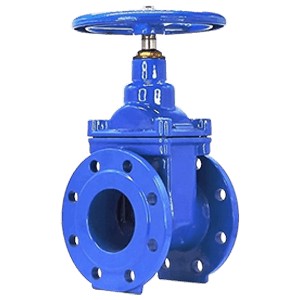
A gate valve, on the other hand, uses a wedge-shaped gate that moves up and down inside the valve body. When fully lifted, the gate clears the passage and allows unobstructed flow. When lowered, it blocks the passage entirely. Gate valves usually have a larger body, more parts, and require more vertical space for operation.
2. Operation and Flow Control
Plug valves are primarily used for quick shut-off. They can be opened or closed with just a quarter-turn. This makes them suitable for applications where rapid action is necessary. However, they are not ideal for throttling, since partial opening can cause erosion of the plug and seating surfaces.
Gate valves operate differently. They require multiple turns of the handwheel to raise or lower the gate. While this means they are slower to operate, it also reduces water hammer and pressure surges. Unlike plug valves, gate valves can be used in situations where full, unobstructed flow is required, but they are not well suited for frequent on-off operation.
3. Sealing and Performance
A plug valve provides good sealing performance due to the close contact between the plug and the valve seat. However, friction between these surfaces can cause wear, especially in large or high-pressure systems. Regular lubrication may be required.
A gate valve offers tight shut-off when fully closed and has low flow resistance when fully open. Because the gate lifts completely out of the flow path, it does not restrict fluid movement. Yet, sealing surfaces may wear over time due to sliding contact, especially in applications with abrasive fluids.
4. Applications
Plug valves are widely used in pipelines carrying gas, oil, chemical fluids, and slurries, especially where quick action is required. Their compact design also makes them suitable for underground and tight-space installations.
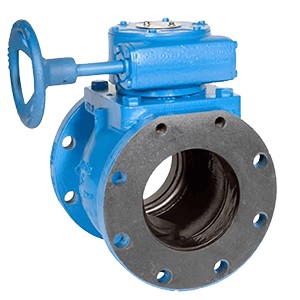
Gate valves are commonly found in water supply, wastewater treatment, power plants, and industrial systems where flow must either be fully open or fully closed. They are preferred in large-diameter pipelines and systems where minimal flow restriction is important.
5. Key Differences at a Glance
Movement: Plug valve requires a 90° turn, gate valve requires multiple turns.
Flow resistance: Plug valve creates some resistance, gate valve offers nearly no resistance when fully open.
Speed: Plug valve operates quickly, gate valve operates slowly.
Maintenance: Plug valve needs lubrication, gate valve requires periodic sealing surface inspection.
Best use: Plug valve for quick shut-off, gate valve for unobstructed full flow.