







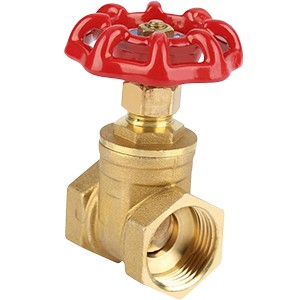
Gate Valve Overview
Gate valves are linear-motion shut-off valves designed for on/off service, not throttling. The internal mechanism uses a rising or non-rising stem that controls a wedge or gate, which moves perpendicular to the flow.They are commonly used in:Municipal water systems.Oil and gas pipelines.Fire protection networks.HVAC and utility systems
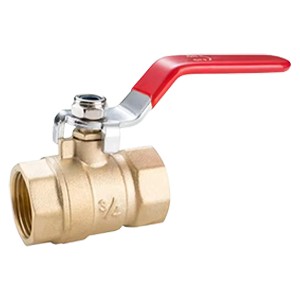
Ball Valve Overview
Ball valves, on the other hand, are quarter-turn valves with a rotating ball that opens or blocks flow. They offer rapid shut-off and are more compact than gate valves, but they’re not always the best choice in certain system conditions.
Why Choose a Gate Valve Over a Ball Valve
1. Better for Full Bore Flow with Minimal Turbulence
Gate valves, when fully open, offer zero obstruction in the pipeline. The straight-through flow design makes them ideal for applications where pressure drop must be minimized, especially in large-diameter pipes.
Ball valves, although low-turbulence, often have smaller internal bores (standard or reduced port), which can restrict flow slightly.
2. Superior Performance in Large-Diameter Applications
In systems with large bore pipelines (e.g., DN300 and above), gate valves are more economical and practical than oversized ball valves, which become costlier and harder to operate at scale.
3. Less Wear and Longer Lifespan in Infrequent Operation
Gate valves excel in applications where the valve stays either fully open or fully closed for long durations. Their design reduces friction wear on the sealing surfaces, whereas ball valves may degrade if used infrequently in dirty or viscous fluids.
4. Fire Safety and High-Temperature Resistance
Gate valves are more suitable in fire-safe environments or high-temperature conditions. Their metallic sealing options make them reliable under extreme temperatures, whereas soft-seated ball valves can fail if seat materials degrade under heat.
When Not to Use Gate Valves
For applications requiring frequent operation or quick shut-off, ball valves are superior.
Gate valves are not suitable for throttling — doing so causes seat and wedge damage.
They take longer to operate manually compared to the quarter-turn design of ball valves.
Conclusion
If your system prioritizes full bore flow, minimal turbulence, high-pressure handling, or large diameters, a gate valve is likely the better option.