







If you’ve ever worked with industrial piping, you’ve probably noticed that globe valves have arrows on their bodies showing the direction of flow. That’s because they are unidirectional valves, meaning fluid should only move one way through them. But why is that?
A globe valve works by moving a disc up and down onto a seat to control flow. When the valve is open, fluid enters from one side, moves upward through the seat, and exits from the top. The path isn’t straight — the flow has to change direction twice inside the valve. That unique shape is what gives the globe valve its name and also what makes it work best in one direction.
So, why not let fluid go the other way? Because that would mess with the valve’s sealing and pressure balance. When fluid flows in the right direction — from under the seat to over the disc — the pressure helps press the disc tightly against the seat when closed. That means a better seal and less chance of leaks.
If fluid comes from the wrong direction, pressure pushes the disc against the stem and packing instead of the seat. That can wear out the internal parts faster and make the valve harder to open or close.
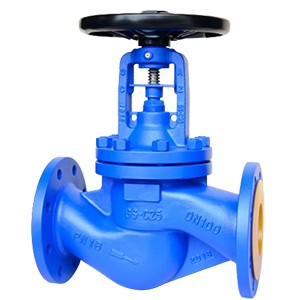
In some special systems, like very high-pressure or high-temperature lines, engineers might reverse the flow on purpose. But this should only be done according to the manufacturer’s design — not just by chance during installation