







1. Structure and Design
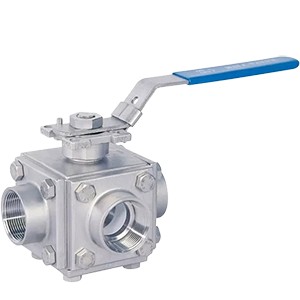
A 3-way ball valve features a spherical ball with a T-shaped or L-shaped bore that connects three different ports. Unlike standard 2-way ball valves, which only allow flow in one straight line (inlet and outlet), the 3-way design allows multi-directional flow paths — making it useful for diverting, mixing, or distributing fluids.
L-Port (Diverter Type):
The L-port ball allows the flow from one inlet to switch between two outlets. It’s typically used to alternate flow between two destinations, like filling two tanks alternately from one supply source.T-Port (Mixing Type):
The T-port ball connects all three ports simultaneously or selectively, allowing fluid to mix or divert between lines. It’s suitable for blending applications or redirecting flow without needing extra valves.
The body of a 3-way ball valve can be made of brass, stainless steel, or PVC, depending on the fluid type and operating conditions. They can be operated manually with a lever or automatically with an actuator.
2. How It Works
Inside the valve, the ball rotates when the handle or actuator moves. The internal passage aligns with the ports to create a specific flow path.
For example:
In an L-port valve, the flow can be switched between outlet A and outlet B.
In a T-port valve, the flow can go to both outlets simultaneously, or it can isolate one side depending on how the ball is turned.
3. Key Advantages
Space Efficiency: Combines the function of two or three valves into one compact unit.
Versatility: Suitable for diverting, mixing, or isolating applications.
Low Maintenance: Simple structure with minimal moving parts.
Excellent Sealing: The ball and seat design ensures tight shutoff and prevents leaks.
Ease of Automation: Compatible with pneumatic or electric actuators for remote control.
4. Typical Applications
Water treatment systems – to control water flow between filtration stages.
HVAC systems – for temperature regulation and bypass operations.
Chemical processing – for mixing or diverting chemicals safely.
Oil and gas – for switching flow between storage and delivery lines.
Food and beverage – for hygienic fluid transfer.