







From Friction to Precision: The Evolution of Butterfly Valve Design
To understand the leap forward, it helps to revisit the limitations of the standard concentric butterfly valve. In a conventional design, the disc rotates on a shaft that sits squarely in the middle of the valve body. When the disc closes, it presses and rubs against a resilient seat—often made of rubber or elastomer—to form a seal.
This design is simple and cost-effective, but it comes with problems:
Constant Rubbing = Faster Wear – The disc scrapes along the seat each time the valve operates, eroding the sealing surface.
Leakage Risks – Over time, the degraded seat can’t maintain a tight seal, especially under higher pressures.
Limited Range – Standard seats struggle under high temperatures or aggressive chemicals, restricting their use to low-to-medium duty applications.
High-performance butterfly valves were developed to address these pain points. The key lies in their offset geometry.
The Double Offset Design
In a double eccentric (or double offset) butterfly valve, the stem is positioned slightly behind the disc sealing surface and offset from the pipe centerline. This small adjustment transforms how the valve operates.
Instead of the disc scraping across the seat, it “cams” into position, only touching the seat at the moment of final closure. Imagine the difference between a door that drags along the floor as it closes versus one that gently settles into its frame at the last second. The latter requires less force, causes less wear, and achieves a cleaner seal.
The Triple Offset Design
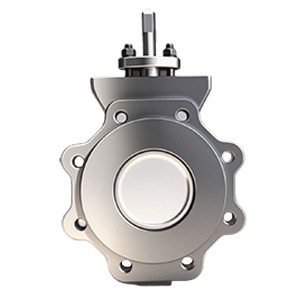
For the harshest conditions—such as high-pressure steam or corrosive chemicals—engineers go a step further with the triple offset butterfly valve (TOV). This design introduces a third geometric offset: the sealing surface is machined into a conical shape. The result is metal-to-metal sealing with zero rubbing during operation.
This design ensures:
Complete elimination of friction during opening/closing
A “bubble-tight” seal even under extreme pressure and temperature
Suitability for fire-safe and fugitive emission-critical applications
In short, triple offset butterfly valves are the gold standard where failure is not an option.
The Performance Payoff: Why Industries Choose High-Performance Butterfly Valves
1. A Bubble-Tight Seal, No Compromises
The most critical performance feature is zero-leakage shutoff. In chemical, oil and gas, or power generation industries, even the smallest leak can cause environmental hazards, lost product, or catastrophic safety incidents. High-performance valves virtually eliminate this risk, offering peace of mind and regulatory compliance.
2. Durability That Saves Money
Because there’s little to no contact between disc and seat during operation, wear is drastically reduced. A valve that might otherwise need replacement in a few years can now last significantly longer. For operators managing hundreds or thousands of valves, that difference translates into millions in maintenance savings over time.
3. Unmatched Pressure and Temperature Tolerance
Standard butterfly valves max out at moderate pressures and temperatures due to their rubber-lined seats. High-performance butterfly valves, particularly those with metal seats, thrive in high-pressure steam lines, cryogenic systems, or corrosive chemical flows where other valves simply cannot survive.
4. Efficiency in Actuation
With reduced friction, less torque is needed to operate the valve. This allows for smaller, less costly actuators—whether pneumatic, hydraulic, or electric. Reduced torque also minimizes energy consumption in automated systems.
5. Versatility in Materials
Seats and discs can be customized with materials like stainless steel, Inconel, or PTFE, depending on the fluid and operating conditions. This makes high-performance butterfly valves adaptable across diverse industries.
Where Reliability Matters Most: Applications Across Industries
The strength of high-performance butterfly valves lies in their adaptability. Their ability to withstand severe service conditions makes them indispensable in a wide range of critical sectors.
Oil & Gas – Offshore rigs, pipelines, and refineries use them to handle hydrocarbons at high pressure while maintaining zero leakage standards.
Power Generation – In nuclear, thermal, and combined-cycle plants, they control superheated steam and cooling water under demanding loads.
Chemical & Petrochemical – Resistant to corrosive fluids and toxic gases, they ensure safe, reliable control in process plants.
Marine & Shipbuilding – Compact yet robust, they are vital for ballast systems, fuel handling, and seawater cooling circuits.
Water & Wastewater Treatment – Large-diameter high-performance valves regulate flow in municipal networks, ensuring longevity with minimal maintenance.
Wherever downtime is costly—or safety is paramount—these valves prove their worth.
A Smarter Investment: Looking Beyond the Price Tag
At first glance, a high-performance butterfly valve carries a higher price tag compared to its standard counterpart. But the calculation should never stop at upfront cost.
Consider:
Longer Service Life – Fewer replacements over decades of operation.
Reduced Maintenance – Less downtime for inspection or seat replacement.
Energy Savings – Smaller actuators consume less power.
Enhanced Safety & Compliance – Avoiding leaks means fewer fines, fewer accidents, and better environmental stewardship.
When viewed holistically, the total cost of ownership (TCO) for a high-performance butterfly valve is almost always lower than the cheaper alternative. Companies committed to sustainable, efficient, and safe operations increasingly see these valves as strategic investments rather than optional upgrades.