







Understanding the Non-Rising Stem Gate Valve
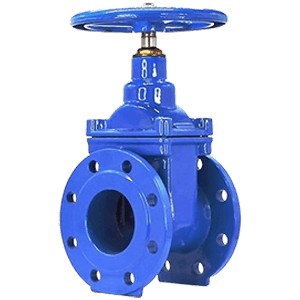
A non-rising stem gate valve is a shutoff valve in which the stem does not move upward or downward during operation. Instead, the stem rotates in place, and the gate moves up or down internally within the valve body.
The key difference lies in the stem-thread arrangement. In rising stem valves, the threads are located outside the valve body, causing the stem to physically rise as the gate is lifted. In non-rising stem valves, the threads are positioned inside the gate, so when the handwheel is turned, the stem rotates in one place while transferring motion to the gate.
From the outside, the valve looks unchanged regardless of whether it is open or closed. This makes it very different from rising stem gate valves, where you can tell the position just by looking at the stem height.
Working Principle of a Non-Rising Stem Gate Valve
To understand how it functions, imagine a fixed screw with a nut moving along it. The screw itself does not go anywhere, but the nut advances or retreats depending on which way you turn it. The non-rising stem gate valve works in exactly the same way.
The stem is fixed in length and does not protrude outside the valve.
When the handwheel or actuator is turned, the stem rotates but does not move vertically.
Inside the valve, the gate (or wedge) has internal threads that engage with the stem.
As the stem turns, the gate moves upward (valve opens) or downward (valve closes).
The flow of fluid is controlled by the position of the gate relative to the valve seat.
In the fully closed position, the gate presses tightly against the seats, creating a strong shutoff with minimal leakage. When fully open, the gate is lifted completely out of the flow path, allowing unobstructed passage and very low pressure drop.This design ensures that the valve is both compact and efficient, making it perfect for installations where space is a concern.
Advantages of Non-Rising Stem Gate Valves
Why would engineers and operators choose this design over a rising stem gate valve? The answer lies in its benefits:
Space-Saving Design
Since the stem does not extend upward, the valve requires much less vertical clearance. This makes it ideal for underground applications, utility pits, or tight mechanical rooms.Stem Protection
In rising stem valves, the exposed threads can collect dirt, dust, or corrosion. Non-rising stem valves keep the threads inside the gate, protected from environmental damage.Compact Structure
The overall height of the valve remains constant whether it is open or closed, simplifying installation in pipelines with limited room.Durability in Harsh Environments
Because the stem is not exposed, it is less prone to wear from weather, contaminants, or accidental impact. This is especially valuable in buried pipelines and outdoor water systems.Cost Efficiency
NRS gate valves are often more economical to install underground because they do not require as much excavation or additional clearance.
Applications of Non-Rising Stem Gate Valves
These valves are widely used across industries, particularly where space or environmental conditions demand a compact and protected design. Common applications include:
Municipal Water Supply Systems: Often installed underground to control water distribution.
Fire Protection Systems: Found in fire hydrant lines and sprinkler systems where reliable shutoff is critical.
Irrigation and Agriculture: Used to regulate water flow in underground irrigation pipelines.
Shipbuilding and Marine: Their compact size and ruggedness make them suitable for confined spaces on vessels.
Industrial Plants: Used in HVAC, oil, and chemical plants where vertical clearance is limited.
Non-Rising Stem VS Rising Stem Gate Valves
It’s worth comparing the two designs to better understand when each is appropriate.
In short, rising stem valves are better when visibility and monitoring are essential, while non-rising stem valves are preferred when space and protection matter most.
Maintenance Considerations
While non-rising stem gate valves are durable, proper maintenance ensures long service life. Here are some tips:
Lubrication: Ensure internal threads are properly lubricated to reduce wear.
Sealing Inspection: Periodically check seat rings and gaskets for leakage.
Operational Testing: Exercise the valve regularly to prevent it from becoming stuck.
Corrosion Protection: For underground installation, coat the valve with anti-corrosion materials and ensure proper wrapping.
With the right care, non-rising stem gate valves can last for decades, providing reliable shutoff performance.