







Globe valves are designed with a rising stem and a linear motion that offers more throttling accuracy than gate or ball valves. Because of this structural characteristic, their opening and closing time is typically longer than other valve types.
This timing affects:
Pressure surges and water hammer
Automation response speed
Actuator selection and torque requirements
System startup and shutdown procedures
Flow control stability
When timing is underestimated, operators may experience unexpected pressure spikes, slow operational cycles, or actuator overload.
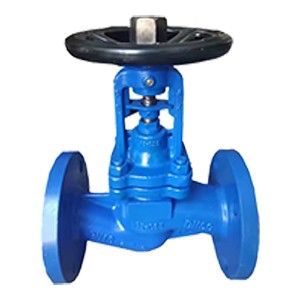
Typical Opening and Closing Time for Globe Valves
There is no single universal time because several factors influence the operation speed. Instead, industry engineers use standard timing ranges depending on valve size and actuator type.
1. Manual Globe Valves
Manual globe valves require multiple handwheel turns to move the stem from fully closed to fully open.
Typical time: 8–45 seconds (operator-dependent)
DN15–DN50: approx. 8–15 seconds
DN65–DN150: approx. 15–30 seconds
DN200–DN300: approx. 30–45 seconds
Manual time varies based on:
Handwheel size
Operator force
Rising stem travel distance
Because globe valves have longer stem travel, they inherently take more time than gate valves with similar sizes.
2. Electric Actuated Globe Valves
Electric actuators offer controlled and predictable operation.
Typical time: 20–120 seconds
Ranges by actuator class:
Small/medium valves (DN15–DN100): 20–45 seconds
Medium/large valves (DN125–DN250): 45–90 seconds
Large valves (DN300 and above): 90–120 seconds
Electric actuators often include:
Torque limiters
Position feedback
Adjustable speed settings
This makes them ideal for applications where stable flow control and precise positioning are important.
3. Pneumatic Actuated Globe Valves
Pneumatic actuators are faster and suitable for emergency operations.
Typical time: 1–5 seconds for quick-acting systems
Up to 10–15 seconds for standard control systems
Influencing factors:
Air pressure
Actuator type (diaphragm vs. piston)
Travel distance
Fail-open/fail-close requirements
Pneumatic actuators are widely used in steam, petrochemical, and high-temperature environments due to their reliability.
What Affects Globe Valve Opening/Closing Time
Even within the same size, timing varies based on engineering conditions. Key factors include:
Valve Size and Stem Travel:Larger valves have longer stroke distances, increasing operation time.
Actuator Type and Torque Output:Higher-torque actuators speed up operation but must still protect against seat damage.
System Pressure Conditions:Opening under high differential pressure requires more force and may slow the actuator.
Valve Design:Standard globe.Angle globe.Pressure-sealed bonnet.High-pressure forged globe valves
Safety and Control Requirements:Some processes intentionally use slow-opening electric actuators to minimize water hammer or thermal shock.
Engineering Recommendation: How to Select Proper Timing
Identify whether precision throttling or quick shutoff is required.
Match actuator speed to pipeline safety requirements.
Avoid overly fast closing times to prevent surges.
For emergency shutdown, consider pneumatic or hydraulic actuators.
Always verify timing with manufacturer data for your specific valve model.
For mission-critical systems—steam networks, high-pressure condensate, chemical dosing—engineers usually prefer controlled, moderate operation speeds to protect valve components.