







What Is a Balancing Valve?
Before diving into location specifics, it’s helpful to understand the role of a balancing valve.A balancing valve is designed to regulate fluid flow in HVAC systems. By creating intentional resistance within certain circuits, it ensures that every terminal unit (e.g., fan coil unit, air handling unit, radiator) receives the correct flow rate—not too much, not too little. Without balancing valves, you risk:
Uneven cooling or heating
Poor system efficiency
Over-pumped circuits and underperforming zones
Increased energy bills and frequent complaints
Best Practice: Install Balancing Valves on the Return Pipe
In 90%+ of HVAC systems, the industry best practice is to install balancing valves on the return line of terminal units.
Why the Return Side?
Stable Temperature for Measurement:
Flow meters and balancing valves work best in lower, more stable temperatures. Return lines are less prone to temperature spikes, ensuring more accurate flow readings.Less Turbulence = Better Accuracy:
On the return line, water flow tends to be more laminar (smooth), making it easier to measure and balance effectively.No Interference with Control Valves:
Placing balancing valves after control valves prevents fluctuations in pressure and flow due to opening/closing of control valves.Energy Efficiency and Comfort:
Proper return-side balancing prevents overheating and underheating, ensuring user comfort and efficient energy use across all zones.
Exceptions: When to Install on the Supply Side
While return-side installation is standard, there are exceptions depending on system type and purpose:
1. Domestic Hot Water Recirculation Systems
In these systems, especially in large buildings, balancing valves may be installed on the supply line to ensure consistent hot water delivery to distant fixtures. Temperature, not flow, becomes the key factor here.
2. Pre-insulated Pipe Installations
Sometimes, system layout or insulation constraints force engineers to place balancing valves on the supply side. In such cases, use valves designed for accurate measurement under variable conditions.
Installation Positioning Guidelines
Beyond just "supply or return," correct positioning within the piping layout is equally important:
Avoid Elbows and T-Junctions Nearby:
Turbulence can skew flow readings. Keep 5x pipe diameter upstream and 2x downstream clearance from bends or fittings.Place Before Isolation Valves (But After Terminal Units):
Allows safe isolation without affecting balancing accuracy.Ensure Accessibility:
Balancing valves often require future adjustments or flow verification. Always install in easily accessible locations.Label Each Valve Clearly:
It aids in commissioning, maintenance, and troubleshooting.
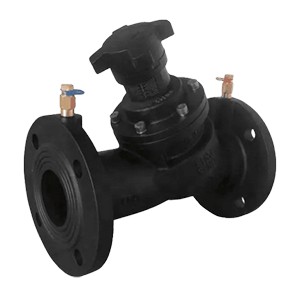
Manual vs. Automatic Balancing Valve Considerations
Manual Balancing Valves:
Require on-site flow measurement during commissioning
Must be installed with measurement ports
Still best suited for return-side placement
Automatic Balancing Valves:
Maintain constant flow without manual adjustment
Can tolerate a bit more variability in system layout
Return-side placement still improves performance and longevity
Bonus Tip: Use Pressure Independent Balancing and Control Valves (PIBCVs)
For modern buildings with dynamic loads and variable flows, Pressure Independent Balancing and Control Valves (PICVs) combine the functions of a control valve and balancing valve in one body.
They maintain constant flow across pressure variations and are perfect for energy-efficient buildings.
???? PICVs are typically installed on the return side of fan coil units and AHUs for the same reasons: stability, accuracy, and performance.
Real-World Applications
At Qingdao I-Flow, we supply balancing valves for a wide range of applications:
Chilled water systems
Hot water heating loops
Domestic hot water recirculation
Industrial water treatment lines
Our valves are engineered with measurement ports, flow indicators, and fine-tuning capability. Whether you need manual balancing, automatic flow regulation, or pressure-independent control, we have a solution ready to meet your project demands.