







What Is a Globe Valve
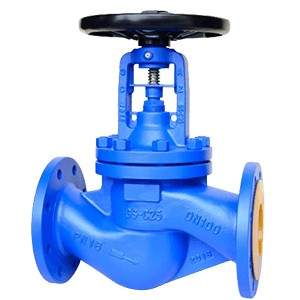
A globe valve is a linear motion valve designed to start, stop, or regulate flow in a pipeline. Unlike ball or gate valves, globe valves are not just for shut-off; they excel in applications requiring precise throttling and flow control. The valve derives its name from its traditional spherical body shape, although not all modern globe valves maintain this design.
At its core, a globe valve features:
A movable disk or plug,
A stationary seat,
A rising or non-rising stem, and
A body with an internal baffle separating the inlet and outlet.
How Does a Globe Valve Work
The operating principle of a globe valve revolves around perpendicular motion of the disk against the flow path. Turning the handwheel moves the stem up or down, which in turn raises or lowers the disk. As the disk comes into contact with the seat, it gradually reduces the flow, allowing for fine-tuned adjustment and secure shutoff.The S-shaped flow path within the globe valve introduces resistance but enables better control — making it a throttling specialist among industrial valves.
Types of Globe Valves
Z-Pattern (Tee Type)
Classic design with excellent throttling but higher pressure drop. Ideal for frequent on/off and flow control cycles.Y-Pattern
Diagonal stem reduces flow resistance. Often used in high-pressure, high-temperature applications like steam systems.Angle Pattern
Flow direction changes 90 degrees, simplifying piping layouts and offering good pulsation resistance.
Advantages of Globe Valves
Precise Flow Regulation: Perfect for systems that require gradual and accurate modulation.
Excellent Shutoff Capabilities: Provides tight sealing even under high-pressure conditions.
Versatility: Handles steam, water, oil, gas, and corrosive fluids.
Directional Flow Design: Helps in throttling applications without compromising reliability.
Limitations of Globe Valves
Higher Pressure Drop: Due to the tortuous flow path.
Larger Size & Weight: Compared to ball or gate valves.
Slower Operation: Manual actuation requires more time and effort.
Applications of Globe Valves
Steam Regulation in Boilers and Turbines
Fuel and Oil Flow Control
Water Cooling Systems
Chemical Injection Lines
Industrial HVAC Circuits
Refineries and Power Plants
Maintenance and Best Practices
Lubricate the stem and packing regularly
Inspect seat and disk for erosion or leakage
Exercise the valve periodically to avoid sticking
Always install with correct flow direction indicated by the arrow
Innovations and Future Trends
Smart actuation systems
Automated control integration
Advanced materials for better corrosion resistance
Digital diagnostics for predictive maintenance