







Basic Function of a 3-Way Plug Valve
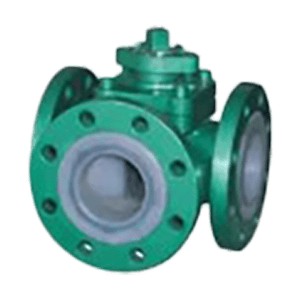
A 3-way plug valve is designed to control, divert, or mix fluid flow between three pipeline ports. Inside the valve body, a rotating plug with specially designed flow passages directs the media along different flow paths depending on the plug position.
Typical Flow Patterns and Characteristics
The flow characteristic of a 3-way plug valve depends mainly on the internal port design. Common configurations include L-port and T-port structures. L-port valves typically direct flow between two selected ports, making them suitable for switching or diverting services. T-port valves allow more flexible flow control, including mixing or splitting flow between multiple outlets.
Flow Control Stability and Pressure Drop
Due to the streamlined internal passage design, plug valves generally offer relatively low pressure drop compared with some other multi-port valves. However, the exact flow characteristic also depends on valve size, plug geometry, and operating position.
Suitability for On-Off and Flow Distribution Applications
Most 3-way plug valves are primarily used for flow direction control rather than precise throttling. They are commonly applied in chemical processing, fuel systems, water treatment, and industrial fluid transfer systems.
Factors Affecting Flow Performance
Material selection, sealing design, and plug surface finish all influence flow efficiency and leakage performance. Proper selection ensures stable flow distribution and long service life.