







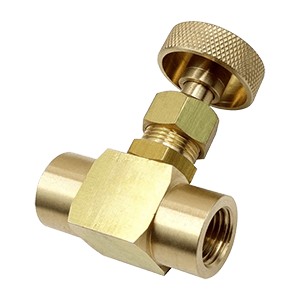
A needle valve is a precision flow control valve designed to regulate small and accurate flow rates in fluid systems. It is commonly used in applications where fine adjustment, stable control, and leak-tight performance are essential, such as instrumentation, hydraulic systems, and gas pipelines.
What Is a Needle Valve
A needle valve features a long, slender, tapered stem (the “needle”) that fits precisely into a matching valve seat. By rotating the handwheel or actuator, the needle moves vertically to control the opening size, allowing accurate control of fluid flow.
Key characteristics include:
Precise flow regulation
Smooth and gradual adjustment
Excellent sealing capability
Ideal for low-flow and high-pressure applications
How Does a Needle Valve Function
Clockwise rotation lowers the needle into the seat, gradually restricting or stopping flow.
Counterclockwise rotation lifts the needle, increasing the opening and allowing more fluid to pass.
Because the needle has a fine taper, even small movements result in very precise changes in flow rate, making needle valves ideal for metering and throttling purposes.
Typical Applications
Pressure and flow measurement lines
Hydraulic and pneumatic systems
Gas control and sampling points
Chemical and laboratory processes