







1. The Basic Principle of Butterfly Valves
A butterfly valve controls flow using a rotating disc mounted on a central shaft. When the disc aligns with the flow, the valve is open; when it rotates 90 degrees, it closes. This simple quarter-turn operation makes butterfly valves efficient and easy to automate.But performance depends on stem placement, sealing method, and seat material — the features that define each butterfly valve type.
2. Concentric Butterfly Valve – The Standard Design
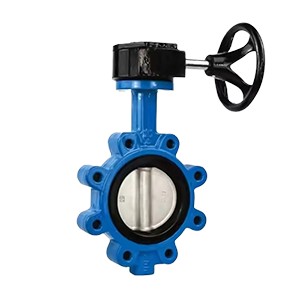
The concentric butterfly valve, also known as the resilient-seated type, is the original and most widely used configuration. In this design, both the disc and stem share the same centerline as the valve body. The seal between disc and seat relies on elastic deformation of a soft seat, typically made of EPDM, NBR, or PTFE.
How it works:When the valve closes, the disc compresses against the soft seat, forming a tight seal. This ensures excellent shutoff for low-pressure systems.
Best suited for:
Water distribution systems
HVAC networks
General fluid service applications
Key advantages:
Simple structure and lightweight body
Economical and easy to replace parts
Minimal torque requirement
Limitations:Soft materials limit usage to moderate temperatures (below 120°C) and low pressures (typically PN10–PN16). Prolonged use in high-pressure systems may cause seat wear or leakage.
3. Double Eccentric Butterfly Valve – Enhanced Performance
To overcome wear and sealing limitations of concentric designs, engineers developed the double eccentric (high-performance) butterfly valve. Here, the disc is offset in two ways:
The stem axis is positioned behind the disc centerline.
The stem is slightly offset from the pipe’s centerline.
Benefits of the double eccentric design:
Reduced seat wear, ensuring longer service life
Lower operating torque for electric or pneumatic actuators
Better sealing in medium-pressure applications (PN16–PN40)
Suitable for temperature ranges up to 250°C
Applications:Commonly used in industrial process systems, marine cooling lines, and district heating systems, where both tight shutoff and extended durability are required.
Typical materials:Body in cast steel or stainless steel, seat in PTFE or laminated metal, depending on medium type.
4. Triple Eccentric Butterfly Valve – Precision Engineering for Harsh Environments
The triple eccentric butterfly valve, often called a metal-seated butterfly valve, represents the highest evolution in design. It introduces a third offset — the sealing surface is conical rather than flat. This eliminates friction during closing and provides a uniform metal-to-metal seal.
How it works:
When closing, the disc cams into position, ensuring tight sealing without rubbing. This design minimizes wear, allowing the valve to operate in extreme conditions, including high pressure (PN40–PN100) and high temperature (up to 600°C).
Advantages:
Excellent tightness and zero leakage performance
Long operational lifespan with minimal maintenance
Suitable for gas, oil, and steam applications
Withstands corrosive and abrasive media
Applications:These valves are widely used in power plants, petrochemical facilities, and offshore platforms where safety and reliability are critical.
Materials:All-metal construction — typically stainless steel, duplex steel, or Inconel — ensures durability under extreme operating conditions.
5. Key Design Differences at a Glance
6. Choosing the Right Butterfly Valve for Your System
Selecting the correct valve design requires understanding system parameters such as pressure, temperature, fluid type, and actuation method.
For general water service, concentric valves offer simplicity and affordability.
For industrial systems, double eccentric valves balance cost with performance.
For extreme service conditions, triple eccentric valves ensure reliability and safety.
Consulting with a professional valve manufacturer like Qingdao I-Flow ensures you receive expert guidance, reliable product quality, and proper material selection for your specific project.