







1. Design and Working Principle
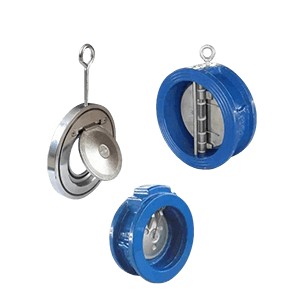
Description of slim “wafer-style” design and installation between flanges.
How the disc/dual plates open with forward flow and close automatically with backflow.
Single-disc vs. dual-plate wafer check valves.
Flow dynamics: why pressure drop is minimal compared to other check valves.
2. Material Options and Construction
Stainless steel, cast iron, ductile iron, bronze, and exotic alloys.
Elastomer seat materials (EPDM, NBR, Viton) depending on fluid compatibility.
Importance of corrosion resistance in marine and chemical applications.
3. Advantages of Wafer Check Valves
Compact, lightweight, and easy to install.
Suitable for horizontal and vertical pipelines.
Energy-efficient with low head loss.
Wide pressure and temperature ranges.
Long service life with minimal maintenance.
4. Applications Across Industries
Water Supply & Wastewater – prevents reverse contamination, supports pump stations.
HVAC – ensures efficient flow in chilled water and heating systems.
Oil & Gas – high-strength versions handle aggressive media and pressures.
Power Generation – protects turbine and boiler feedwater lines.
Marine & Shipbuilding – compact solution for limited engine room space, resistant to seawater.
Chemical Processing – reliable in corrosive and abrasive environments.
Real-life examples or project cases where wafer check valves proved essential.
5. Installation and Maintenance Best Practices
Correct orientation (flow direction marking).
Ensuring proper flange compatibility.
Routine inspection of disc movement and sealing surfaces.
Common mistakes to avoid: overtightening, misalignment, unsuitable material selection.
6. Wafer VS Other Check Valves
Compare with swing check valves (larger, more space needed).
Compare with lift check valves (higher pressure drop).
Explain why wafer type is the preferred solution when space and efficiency matter.