







Valves are the backbone of fluid control systems. Whether in water treatment plants, oil and gas pipelines, marine vessels, or HVAC installations, valves regulate flow, maintain pressure, and ensure operational safety. A single valve failure can lead to downtime, leakage, safety hazards, or costly repairs. For this reason, verifying valve quality before procurement and installation is not optional—it is a necessity.
1. Material Verification: The Foundation of Quality
The material used in a valve determines its strength, corrosion resistance, and suitability for specific applications. For example, stainless steel is commonly used in corrosive environments, while cast iron may suffice in less demanding water applications.
Key Checks:
Material Certificates – Always request a mill test certificate (MTC) or equivalent documentation to verify chemical composition and mechanical properties.
Corrosion Resistance – Inspect if the material is suitable for the intended fluid (e.g., seawater requires bronze or duplex stainless steel).
Traceability – Each valve should have markings or codes that trace back to its production batch and material source.
2. Casting and Forging Quality: The Structural Backbone
Poor casting or forging leads to internal defects that may not be visible during visual inspection but can cause early failure under pressure.
Inspection Steps:
Surface Finish – The valve body should be smooth without cracks, blowholes, or sand inclusions.
Dimensional Accuracy – Confirm that dimensions match technical drawings or standard specifications.
Non-Destructive Testing (NDT) – Advanced inspections such as ultrasonic testing, radiography, or dye penetrant testing reveal internal flaws.
A valve that passes NDT gives confidence that it can handle pressure cycles and extreme conditions without structural weakness.
3. Machining Precision: Accuracy in Operation
After casting or forging, valves undergo precision machining to create sealing surfaces, threads, and connections. Poor machining results in leakage, vibration, or reduced lifespan.
Checks to Perform:
Sealing Surfaces – The seat, disc, or ball must be smooth, uniform, and free from scratches.
Tolerance and Alignment – Measure dimensions using calibrated instruments. Misalignment can compromise sealing.
Thread and Flange Quality – Threads should be sharp and accurate. Flange faces must be flat to ensure gasket sealing.
Experienced inspectors often use borescopes and measuring gauges to confirm accuracy.
4. Pressure and Performance Testing: The Heart of Quality Control
No valve should leave the factory without undergoing rigorous performance tests. These tests simulate real operating conditions and confirm that the valve can handle pressure, temperature, and flow.
Common Tests:
Hydrostatic Test – The valve is filled with water and pressurized above its rated working pressure (typically 1.5 times). Inspectors check for leaks, bulging, or deformation.
Pneumatic Test – Air or nitrogen is used to test leakage under low pressure. This is especially important for valves handling gas.
Functional Test – The valve is operated repeatedly to ensure smooth opening and closing.
Specialized Tests – For certain industries, additional testing is required:
Fire-Safe Test – Verifies valve integrity during fire exposure.
Fugitive Emission Test – Ensures minimal gas leakage for environmental compliance.
Cryogenic Test – For valves in extremely low temperatures.
Documentation of these tests must be provided with the shipment.
5. Coatings and Surface Protection: Guarding Against Corrosion
Valves often operate in harsh environments. Surface coatings protect against rust and wear.
Visual Check – Look for uniform coating without bubbles, cracks, or peeling.
Coating Type – Epoxy, galvanizing, or special paint systems may be applied depending on use.
Thickness Measurement – Use gauges to confirm coating thickness meets specifications.
High-quality coating extends valve service life and reduces maintenance costs.
6. Functional Evaluation: Smooth Operation Matters
A valve’s quality is not only about strength—it’s about usability. A well-made valve should operate smoothly, without excessive resistance or noise.
Manual Valves – Turn the handwheel or lever. The movement should be smooth and consistent.
Automated Valves – Check actuator responsiveness and calibration. Signals should translate into precise valve movement.
Seating and Unseating – The valve should seal tightly when closed and open fully without obstruction.
Operators often perform multiple open/close cycles to confirm durability.
7. Standards, Certification, and Compliance
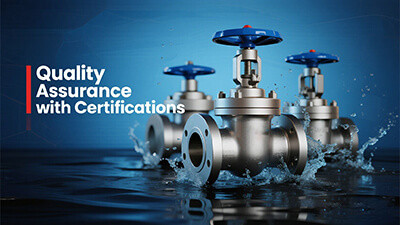
Reliable valves must comply with internationally recognized standards. These ensure that the design, materials, and performance meet industry benchmarks.
Important Standards:
API (American Petroleum Institute) – Widely used in oil and gas.
ASME (American Society of Mechanical Engineers) – Covers pressure ratings and testing.
DIN/EN (European Standards) – Common in industrial and marine applications.
ISO 9001 – Quality management certification for manufacturers.
CE, WRAS, DNV, GL, ABS – Markings for safety, potable water approval, and marine classification.
A genuine valve should carry visible markings such as size, pressure rating, material grade, and manufacturer logo.
8. Documentation and Traceability
Complete documentation is a hallmark of a quality product. Reliable manufacturers provide:
Test certificates
Material reports
Compliance certificates
Operating manuals
Maintenance guidelines
9. Common Mistakes in Valve Quality Checking
Even professionals sometimes overlook critical steps. Mistakes include:
Focusing only on price instead of total lifecycle cost.
Skipping NDT and relying solely on visual checks.
Accepting valves without proper test certificates.
Ignoring actuator compatibility for automated systems.
Avoiding these mistakes ensures long-term reliability and safety.
Why Choose I-FLOW for Valve Quality Assurance
At Qingdao I-FLOW, quality is not just a standard—it’s our foundation. Since 2010, we have supplied valves to over 40 countries, serving industries such as marine, HVAC, oil and gas, and water treatment. Our valves are tested under ISO 9001 quality control, certified by CE, WRAS, DNV, LR, and ABS.
We perform 100% pressure and leakage testing before shipment. Our in-house R&D team, experienced inspectors, and advanced facilities ensure that every valve meets global standards. Projects like Shangri-La Hotel, Milan Expo, and MSC vessels stand as testimony to our reliability