







What Is The Pneumatic Butterfly Valve
A pneumatic butterfly valve is a type of quarter-turn valve that uses compressed air to drive an actuator which opens or closes the valve disc inside a pipe. The disc rotates 90° on its axis to allow or block fluid flow.
It’s especially valuable in systems requiring fast operation, remote control, or high-cycle performance, and is often found in:
Water treatment systems
Industrial automation
Food and beverage lines
Oil & gas
HVAC and chilled water loops
Main Components
Valve Body: The outer casing that houses the internal components and connects to the pipe.
Disc: A circular plate that rotates to control flow.
Stem/Shaft: Connects the actuator to the disc.
Seat: Provides sealing between the disc and valve body when closed.
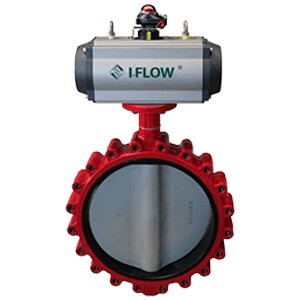
Pneumatic Actuator: The device powered by compressed air that turns the stem and disc.
Working Principle: From Air to Action
When compressed air is introduced into the actuator:
It generates torque that rotates the internal shaft.
This torque is transferred to the disc.
A quarter turn (90°) is usually all it takes to go from fully open to fully closed.
In modulating applications, the actuator stops at specific angles for throttling control.
In the open position, the disc is parallel to the flow, offering minimal restriction.
In the closed position, the disc is perpendicular to the flow, sealing off the passage.
Types of Pneumatic Actuators Used
Single-Acting (Spring-Return): Air opens or closes the valve, and a spring returns it to the default position. Good for fail-safe operations.
Double-Acting: Air is used for both opening and closing. Offers more control, power, and consistency.
Benefits of Pneumatic Butterfly Valves
Fast and reliable actuation in high-cycle systems
Low pressure drop due to streamlined flow path
Cost-effective for large-diameter pipe installations
Compatible with automation systems (PLC, DCS)
Minimal maintenance requirements compared to electric or hydraulic actuators
Common Applications
Water distribution and treatment plants
Process automation in chemical plants
Steam systems (with metal seats)
Pharmaceutical production lines
Marine systems (seawater lines, ballast tanks)
Key Considerations Before Selection
Media type: liquid, gas, slurry, corrosive fluid
Pressure and temperature ratings
Actuation response time
Fail-safe requirements (spring return or not)
Control type: On/off vs modulating