







Safety valves are critical components in modern pressure protection systems, designed to prevent overpressure, equipment damage, and serious safety accidents. Across industries such as oil and gas, chemical processing, power generation, marine engineering, HVAC, and industrial manufacturing, safety valves serve as the final line of defense when system pressure exceeds safe limits.
What Is a Safety Valve
A safety valve is an automatic pressure-relief valve that opens when system pressure reaches a preset limit. Its purpose is to release excess pressure and protect pipelines, pressure vessels, boilers, compressors, and storage tanks.
Key characteristics of safety valves include:
Automatic operation (no external power required)
Fast response to overpressure
Automatic reseating after pressure normalization
Compliance with international safety standards
Common search-related terms:industrial safety valve, pressure safety valve, overpressure protection valve, automatic relief valve
Why Safety Valves Are Essential in Industrial Systems
Overpressure can result from:Thermal expansion.Blocked outlets.Equipment malfunction.Fire exposure.Pump or compressor failure
Without a properly selected pressure safety valve, these conditions can lead to:Pipeline rupture.Equipment explosion.Environmental contamination.Serious injury or loss of life
This is why safety valves are mandatory in regulated pressure systems.
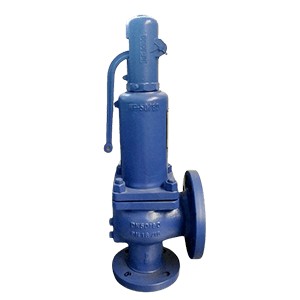
Main Types of Safety Valves
1. Spring-Loaded Safety Valve
The spring-loaded safety valve is the most widely used type of safety valve in industrial applications.
How it works:A calibrated spring holds the valve disc closed. When system pressure exceeds the set pressure, the disc lifts and releases fluid.
Key benefits:Simple structure.Reliable performance.Cost-effective.Easy maintenance
Common applications:Steam boilers.Pressure vessels.Compressors.Gas and steam pipelines
2. Pilot-Operated Safety Valve
A pilot-operated safety valve uses system pressure to control a larger main valve through a pilot mechanism.
How it works:The pilot valve senses pressure and controls the opening of the main valve, allowing high flow capacity with minimal leakage.
Key benefits:High relieving capacity.Accurate set pressure.Stable operation under high back pressure
Common applications:Oil and gas pipelines.Refineries.Petrochemical plants.High-pressure gas systems
3. Safety Relief Valve
A safety relief valve combines the characteristics of both a safety valve (for gas/steam) and a relief valve (for liquids).
How it works:The valve opens proportionally as pressure increases and can handle both compressible and incompressible fluids.
Key benefits:Versatile operation.Smooth pressure control.Suitable for mixed media
Common applications:Chemical processing systems.HVAC installations.Liquid and vapor service
4. Balanced Bellows Safety Valve
A balanced bellows safety valve is designed to handle variable back pressure conditions.
How it works:A metal bellows isolates the spring chamber from downstream pressure, maintaining accurate set pressure.
Key benefits:Back pressure compensation.Improved sealing performance.Protection against corrosive fluids
Common applications:Chemical plants.Systems with fluctuating back pressure.Corrosive or hazardous media
5. Low-Lift Safety Valve
A low-lift safety valve opens only slightly when activated.
Key benefits:Controlled pressure release.Compact size
Common applications:Liquid service.Low-pressure systems
6. Full-Lift Safety Valve
A full-lift safety valve opens rapidly to its maximum position once set pressure is reached.
Key benefits:Maximum discharge capacity.Rapid pressure relief.High safety performance
Common applications:Steam boilers.Gas systems.High-risk pressure vessels
How to Choose the Right Safety Valve
Correct sizing and certification are essential for legal compliance and system safety.To select the correct safety valve, consider:
Set pressure and relieving capacity
Type of medium (gas, steam, liquid)
Operating temperature
Back pressure conditions
Installation orientation
Compliance with standards (ASME, API, ISO, CE)